
NEW BOOK IS THE FIRST ON STUDIES OF RADIOACTIVITY IN BABY TEETH FROM ATOMIC BOMB EXPLOSIONS AND NUCLEAR REACTOR EMISSIONS
Studies measuring radioactive Strontium-90 in baby teeth, from atomic bomb tests and nuclear reactor emissions, are the subject of a first-ever book on the topic, published this month.
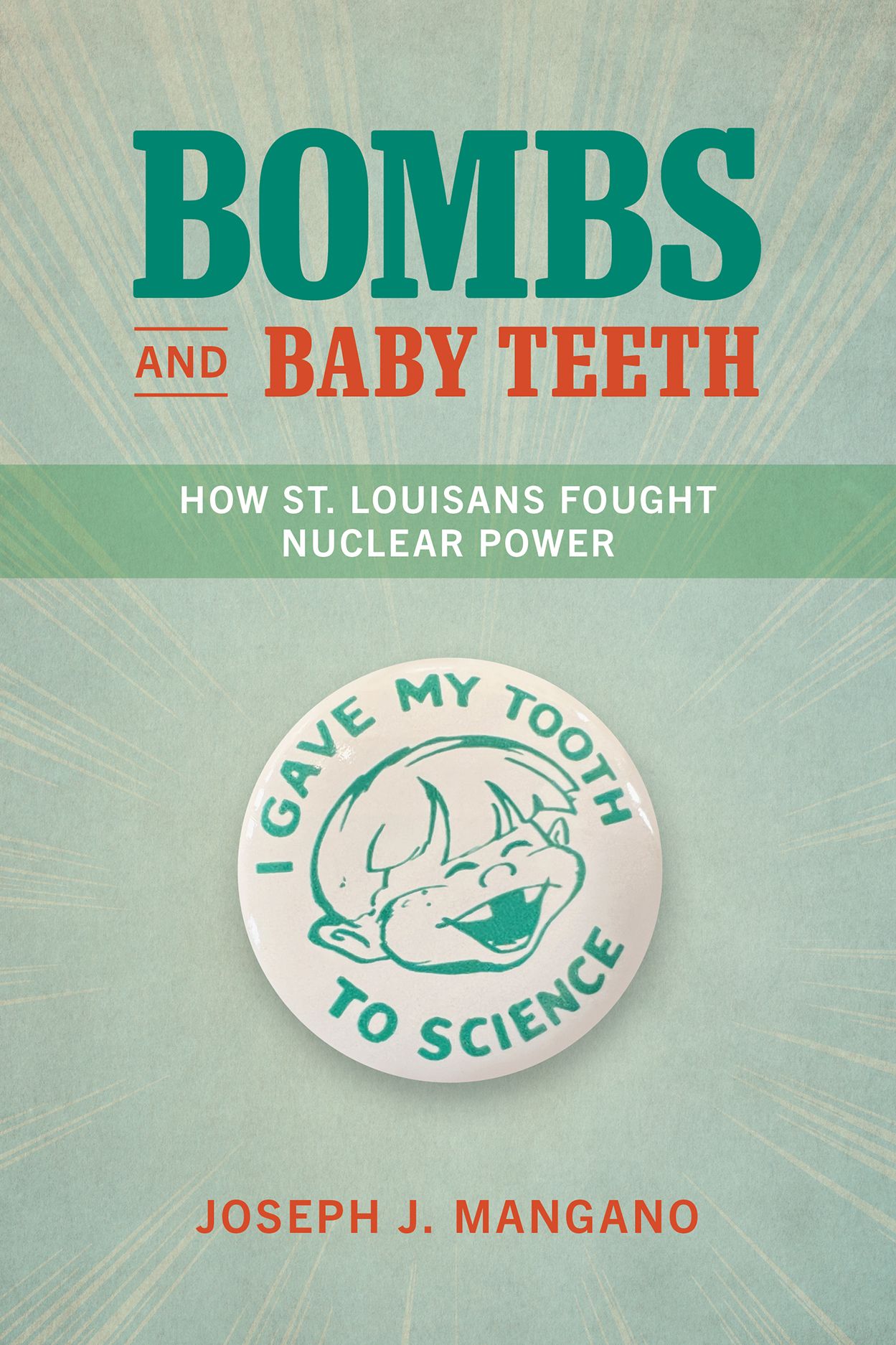
Bombs and Baby Teeth: How St. Louisans Fought Nuclear Power begins with a landmark project during the Cold War. Hundreds of above-ground bomb explosions in Nevada and the South Pacific propelled fallout, consisting of huge amounts of over 100 man-made and cancer-causing metal particles across the U.S.
Fallout returned to Earth through rain and snow, and entered bodies through food and water. In 1958, St. Louis citizens and scientists concerned about the hazards of fallout from bomb tests created the Committee for Nuclear Information. The group’s mission was to inform the public about hazards of nuclear war and bomb fallout.
The Committee’s first project was the Baby Teeth Survey, which collected a staggering 320,000 baby teeth and tested them in a lab at Washington University. Results confirmed the fears of many. Levels of toxic Strontium-90 in these teeth had skyrocketed as tests continued.
Results were published in scientific journals and shared with officials, including President John F. Kennedy. The Committee urged citizens to write letters to officials, demanding a ban on atmospheric nuclear tests. These results and letters, plus an intensive publicity campaign led by Kennedy, helped convert a previously cautious Senate to ratify the treaty. The United Kingdom and Soviet Union also signed the agreement. Fallout levels in bodies plunged, which saved many lives.
The St. Louis project became a model for future studies of baby teeth. Other nations conducted similar studies of Sr-90 in baby teeth, with the same results. Years later, the Radiation and Public Health Project (RPHP) research group followed suit. RPHP tested 5,000 baby teeth for Sr-90, not from bomb fallout, but from nuclear reactor emissions.
RPHP lab tests had several major findings:
- Average Sr-90 level in teeth of U.S. children born near reactors in the late 1990s was 49% higher than in those born in the late 1980s.
- For six areas, Sr-90 levels were highest in children living closest to reactors.
- Near Diablo Canyon (San Luis Obispo and Santa Barbara counties), the Sr-90 level in baby teeth was 31% higher than elsewhere in California.
 Results of the RPHP study were published in scientific journal articles and used to educate citizens living near plants. This research and education helped speed the shutdown of the Indian Point NY and Oyster Creek NJ nuclear plants. To date, it remains the only study of radioactivity levels in bodies of Americans living near nuclear reactors.
The original tooth study helped speed the ban on bomb tests, but questions about long-term health effects of fallout persisted. In 2001, an unexpected discovery of 100,000 untested baby teeth made answers to this issue possible. Each tooth was enclosed in an envelope, paper-clipped to a 3 x 5 card with data on the child and tooth. Washington University donated the tooth collection to RPHP.
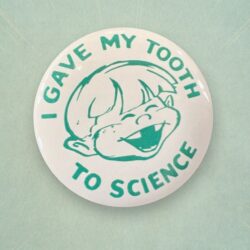
Media stories ensued. Many who grew up in St. Louis recalled the original study. An especially clear memory was the small metal pin given to each child, displaying a picture of a young boy missing his front teeth with the words “I Gave My Tooth to Science.”
Hundreds of tooth donors who had been diagnosed with cancer and other diseases contacted RPHP. Each supported follow-up health studies, as they had long wondered if bomb test fallout had raised their risk later in life. RPHP published a journal article using 60 of the teeth and found average Sr-90 levels in those who died of cancer were more than double those of healthy tooth donors.
Harvard University public health professor Marc Weisskopf became interested in the 100,000 baby teeth. He and his colleagues have published nine journal articles. Results show high levels of heavy metals in baby teeth are linked with a higher later-life risk of cognitive diseases. Purdue University physics professor Aaron Specht plans to expand the RPHP study of bomb fallout levels in baby teeth and later-life risk of dying of cancer.
The new book explores the evolution of these studies. It pays special attention to the strength of scientists and citizens working together towards a common goal. And it shows that citizens, especially mothers of young children, were able to influence public policy simply by donating their children’s baby teeth.
Joseph Mangano, an epidemiologist and Executive Director of RPHP, is the author of the book, which is published by the Missouri Historical Society Press. Endorsements of the book include Weisskopf, actor/activist Alec Baldwin, and model/activist Christie Brinkley, whose work was recently recognized with the establishment of a World Business Academy Chair in her name.
For more about how to obtain the book, see the link below.
https://press.uchicago.edu/ucp/books/book/distributed/B/bo278022174.html