
By Joseph Mangano
July 22, 2026
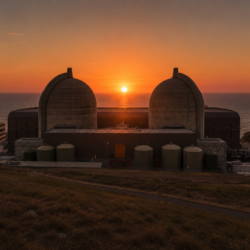
The Diablo Canyon nuclear power plant in central California has featured two large reactors operating since the mid-1980s. The initial application by Pacific Gas and Electric (PG&E) to build these reactors took place in the post-World War II era, when utilities in California and across the U.S. were planning to make nuclear the main source of electricity in the nation.
That vision has collapsed under the pressures of economic which says that nuclear makes no financial or environmental sense, and impossible engineering targets that have never been met, and cannot be met. An early federal proposal to operate 1,200 reactors in the U.S. has only resulted in 130 ever built of which 94 are now operating, with no additional ones presently under construction. The California state assembly supported a plan to build 63 reactors, but only seven were built. Five of these reactors – all except Diablo Canyon units 1 and 2 – have closed permanently.
From the outset, nuclear reactors like Diablo Canyon have raised concerns, including:
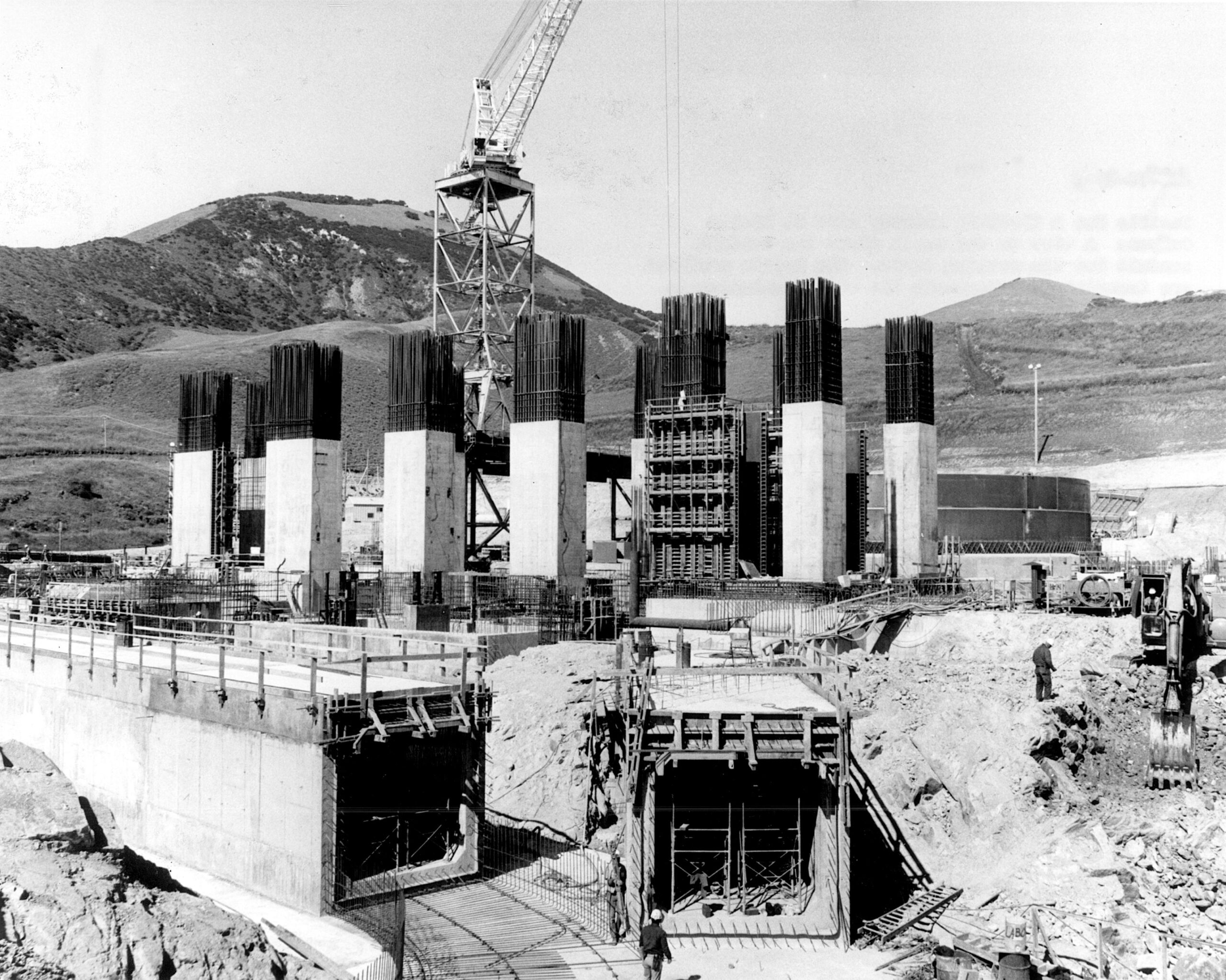
High Startup Costs. Actual costs of planning and construction of reactors far exceeded initial estimates. PG&E’s projected Diablo Canyon would cost $320 million to build, but actual expenses were $5.3 billion. Moreover, the actual construction took 17 years between the license application and startup.
High Maintenance Costs. Reactors were initially licensed to operate for 40 years – the expected life of its parts. But many U.S. reactors, including Diablo Canyon, have exceeded this period. Aging parts become embrittled and require extensive maintenance; PG&E is now seeking several billion dollars in government subsidies to enable the plant to absorb those outrageous maintenance costs and rate increases so it can continue to operate in the future.
Hazardous Waste. Reactors produce over 100 radioactive chemicals not found in nature (the same as in atomic bomb tests). These cancer-causing isotopes must be constantly cooled in reactor cores to prevent a meltdown. Later, they are placed in pools of cooling water, and subsequently in “dry” steel and concrete casks at each plant, as no national waste site exists. Currently, Diablo Canyon’s radioactive waste is 2-3 times what was released at the Chernobyl meltdown.
Routine Emissions. Reactors must release some of its waste into local air and water. These releases are relatively low-level but raise concerns that cumulative exposure to these toxic chemicals place local residents at greater risk for cancer and other diseases – especially exposures to those most vulnerable to radiation (infants, children, frail elderly, those with immune disorders). Official reports show occasional “spikes” in emissions, including Diablo Canyon in 2015 and 2022.
Chance of Meltdown. If radioactivity in reactor cores and waste pools is not constantly cooled, a large-scale meltdown like those at Chernobyl and Fukushima become possible. In California, smaller meltdowns occurred at a Santa Susana research reactor and at the Humboldt Bay power reactor. In addition, four faults discovered near Diablo Canyon (Hosgri, Los Osos, San Luis Bay, and Shoreline) similarly raise the possibility of a meltdown at the plant caused by an earthquake.
The chance for a meltdown at Diablo Canyon’s core or fuel pools is illustrated by the 2011 disaster at the Fukushima-Daiichi plant in Japan, after an earthquake. Fifteen years after the event, the stricken plant has not been brought under control (and never will be), the fission reaction has never stopped, and cooling water containing radioactivity is released into the Pacific Ocean on a daily basis. Some of this radioactivity eventually reaches the California coast.
Thermal Pollution. The Diablo Canyon reactors must draw huge amounts of water from the ocean each day and return the water to the ocean at temperatures 20 degrees above normal, which (together with inadequate intake coolant procedures) results in killing billions of fish. As a consequence, most of the aquatic life in the Pacific Ocean near the plant has died off. Offshore of Diablo is a veritable wasteland with no marine life.
The original PG&E proposal provoked large-scale opposition, including multiple public protests which continued for years while the plant was under construction. Groups including the Abalone Alliance and Mothers for Peace organized protests starting in 1977. The largest occurred in September 1981, in which 1,900 persons were arrested in a two-week period.
In June 2016, as the two reactors approached the end of their 40-year license, PG&E announced a joint agreement with Friends of the Earth, NRDC, and other environmental groups to increase investment in energy efficiency, renewables and storage. Included in this agreement was a phasing out of nuclear power at Diablo Canyon, when its licenses expired in November 2024 and August 2025. The proposal was enacted into law by the California legislature.
As these dates approached, Governor Gavin Newsom proposed providing PG&E with a $1.4 billion loan to support continued operation of Diablo Canyon for 5-10 years beyond its license expiration. The state legislature enacted Newsom’s proposal, while voiding the 2016 agreement. Soon after, the U.S. Department of Energy approved $1.1 billion for Diablo Canyon maintenance. The utility is expected to request more from a federal program for reactors facing shutdown
The state utilities commission approved a five-year extension of Diablo Canyon’s license, to 2029. The U.S. Nuclear Regulatory Commission approved a 20-year extension, but additional approval by the state legislature is still required before the measure becomes law. The measure has also drawn legal actions by Mothers for Peace opposing continued licensing.
In 2025, Diablo Canyon produced 8.4% of California’s electricity – a figure which has never exceeded 10%. In contrast, renewable energy sources including wind and solar power produced 51.3% of California’s 2025 electricity, a figure which is growing annually. Currently, the electricity from Diablo Canyon is surplus (not needed) nearly every day and could easily be replaced by renewables virtually overnight if Diablo was to close.
The growth of wind, solar, and geothermal have made all nuclear-generated electricity in California totally surplus even though Diablo’s continued operations have dramatically restrained further growth of renewables. A sharp reduction in the cost of batteries has made wind and solar more accessible, even on days when wind speeds are light and when the sun doesn’t shine. In addition, Chevron’s 2025 allocation of $10 billion to geothermal energy development will result in a dramatic increase of this renewable source of power over the next several years, all done with private capital, and will further render obsolete the Diablo Canyon nuclear facility.
Diablo Canyon is sited in a growing area. In 2010, the population living under 10 miles from the plant was 26,123 (an increase of 50% from a decade earlier). The population residing under 50 miles as of last year was 465,521 (up 22%).
An April 2026 report found worsening trends in San Luis Obispo County infant health. In the two decades before Diablo Canyon startup, the county infant death rate was 16% below the state rate. But since 2010, the county is 1% higher (11% and 23% higher for Caucasians and Hispanics). Local infant health has also worsened, with higher rates of low-weight births, premature births, and birth defects. A fetus and an infant are most vulnerable to radiation exposure, so exposures to Diablo Canyon releases are a likely factor. The Academy reported on the infant health issues in April (Diablo Canyon Nuclear Power Plant – 2026 Health Update) and will be doing a follow-up report next month on the latest authoritative health survey which includes adults. Although it isn’t “fun” to read, you won’t want to miss it for the very valuable information it conveys.
In the meantime, let’s just pray that the embrittled and beyond its-useful-life Diablo reactor doesn’t experience any serious tragedy from an earthquake or otherwise beyond its daily harmful emissions. The fate of people living downwind from Diablo, all the way to Santa Barbara, live in the “high risk” zone.