
By Joe Mangano
August 8, 2026
On April 18th, The Lancet published an article entitled The Medicine of… Nuclear Power Plan, written by journalist Talhi Burki, which falsely described reactor hazards as “extremely small,” and nuclear as a “safe, clean, and affordable” answer to electricity demand and climate change. Given how prestigious The Lancet is, it decided to publish a very strong rebuttal on July 18th by two physicians, Philip Landrigan and Brita Lundberg, on the dangers and limits of nuclear power entitled “The False Promise of Nuclear Power.”
In an in-depth, well-researched, and footnoted reply, Landrigan-Lundberg listed the concerns numerically referenced below about nuclear power. These concerns, it should be noted, are often ignored or minimized by proponents of expanding nuclear power as an electricity source.
The Landrigan/Lundberg article states and provides sources for each of the following:
- Uranium, which fuels nuclear reactors, is radioactive and causes cancer. Occupational exposure from mining uranium, converting it to fuel, and working in nuclear plants raises cancer risk. Radioactive waste stored at plants remains radioactive for thousands of years.
- The Harvard School of Public Health researchers recently published a study that found 115,000 excess cancer deaths near U.S. nuclear reactors from 2000-2018. Another study published even more recently, a few days ago, by the Harvard team estimated 390,000 excess total U.S. deaths near reactors, also from 2000-2018.
- Unlike other sources of electricity, nuclear reactors can cause mass catastrophes, including meltdowns such as those at Chernobyl which will remain unsafe for humans and animals for 1,000 years, and Fukushima, which continues to go off, sending millions of gallons of highly radioactive water into the Pacific Ocean, as the reaction has never been stopped.
- All nuclear reactors produced high-level toxic waste that will remain radioactive for millennia.
- Nuclear reactor fuel can be converted into weapons-grade form.
- Nuclear power releases climate-changing greenhouse gases, releasing 66 grams of greenhouse gases per kWh of electricity, mostly by uranium mining and milling, which causes documented increases in lung cancer in those miners exposed to uranium hexafluoride and radon. Levels are lower than fossil fuels, but incomparably higher than renewables like wind and solar power.
- Nuclear reactors are expensive to operate, increasing the levelized cost of nuclear energy by 47% since 2009, not including health-related costs and construction cost overruns of new reactors. In contrast, since 2010 costs have plummeted for solar power (down 90%), wind power (down 70%), and batteries (down 99%).
The Landrigan/Lundberg article concludes by stating: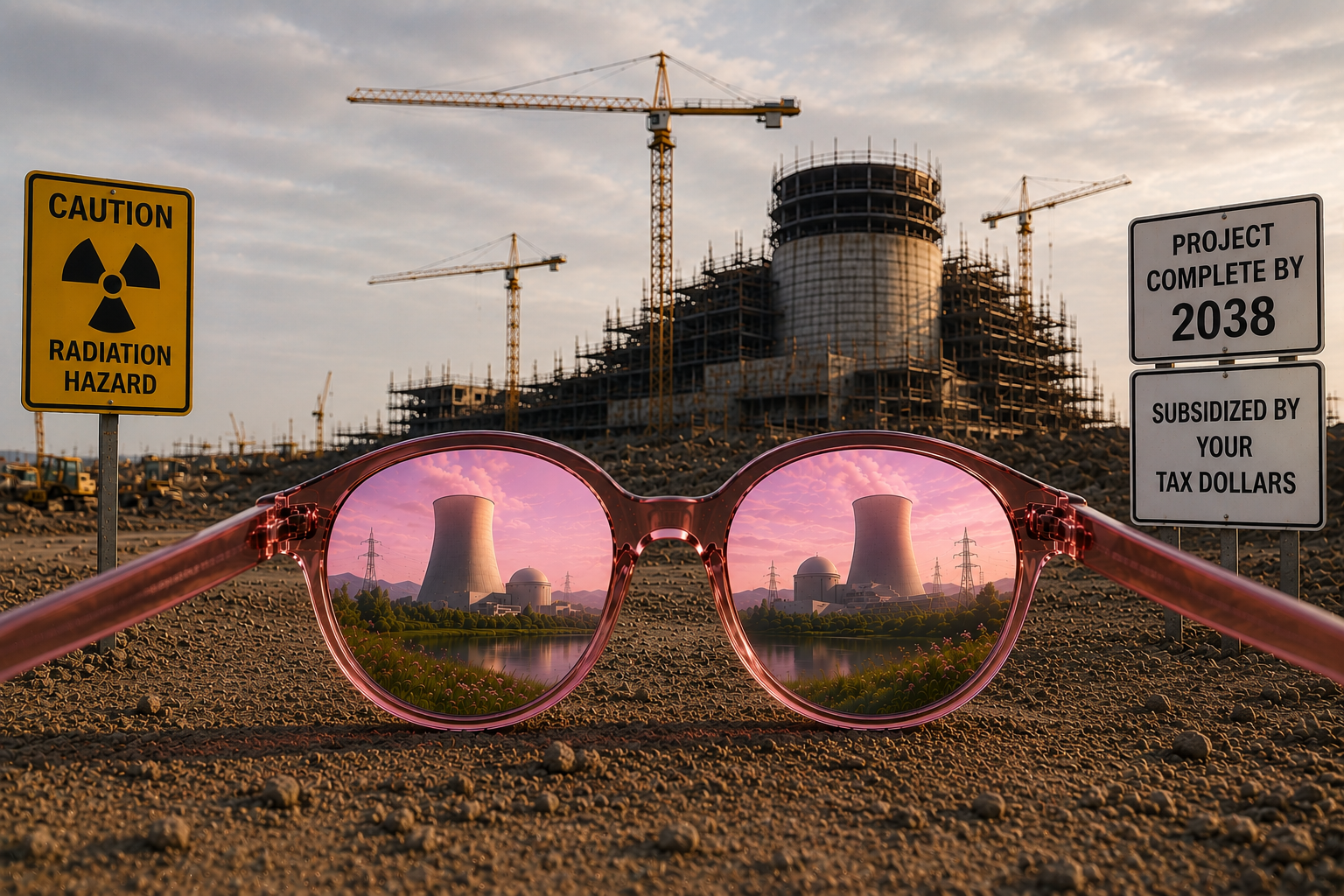
“Nuclear power is economically viable only when it receives massive subsidies, tax breaks, and liability exemptions. Nuclear power is a dangerous distraction. It is time to move beyond it and invest in renewables.”
Dr. Landrigan is a pediatrician and epidemiologist at Boston College. He is an expert in environmental toxins, including lead, pesticides, asbestos, and radiation, and co-authored Harvard’s landmark article on excess cancer rates near nuclear plants referenced above. Dr. Lundberg is a physician specializing in infectious diseases and internal medicine, and is with Greater Boston Physicians for Social Responsibility.
Landrigan and Lundberg’s article The false promise of nuclear power can be accessed at:
https://www.thelancet.com/journals/lancet/article/PIIS0140-6736%2826%2901304-8/fulltext