
September 30, 2026
By Rick Wayman
California is in the throes of an escalating insurance crisis. Between 2012 and 2021, direct underwriting profits for California homeowners’ insurers averaged -13.1%, causing major carriers to freeze policies or abandon the state altogether. On the consumer side, premiums have surged 50-84% since 2020, funneling desperate property owners into the financially overstrained California FAIR Plan.
In response to this crisis, the World Business Academy has published a policy briefing addressed to California’s next Insurance Commissioner, entitled Microgrids with Hydrogen as the Long-Term Solution to California’s Insurance Crisis. The brief urges the incoming regulator to actively collaborate with energy regulators to modernize California’s electrical grid. This can be accomplished by replacing hazardous, centralized transmission infrastructure with localized renewable microgrids backed by hydrogen fuel cells.
Utility transmission and distribution lines are responsible for a significant share of California’s most destructive fires. Over the last two decades, annual acreage burned in the state has climbed 153%. Utilities and lawmakers have leaned into Senate Bill 884, pushing to bury thousands of miles of utility distribution lines at a cost of $3-4 million per mile. Utility rate-base return models will pass billions in capital costs directly onto consumers. Furthermore, undergrounding simply trades fire hazard for flood vulnerability, leaving buried infrastructure susceptible to heavy rains, rising water tables, and prolonged outages during repair work due to restricted access.
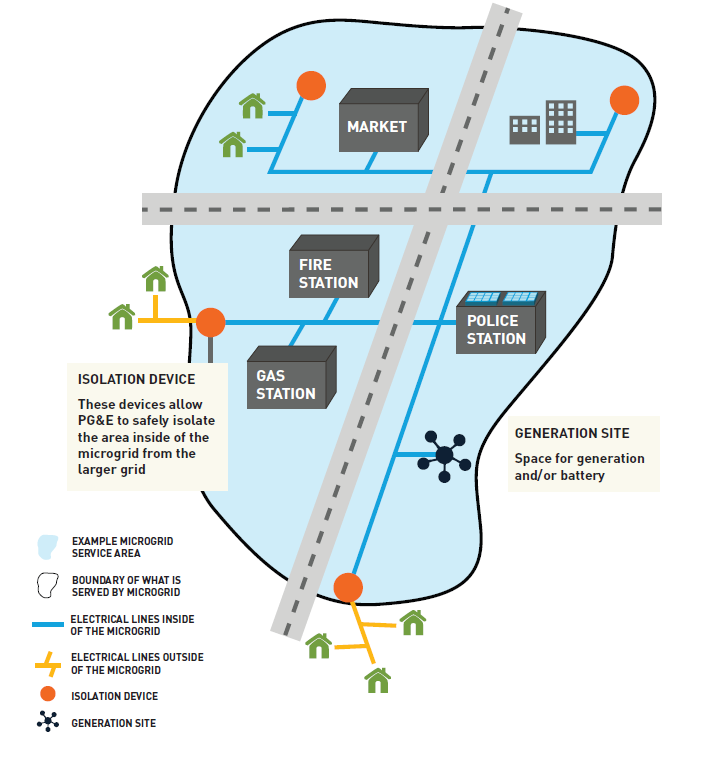
The Academy advocates bypassing long-distance overhead transmission corridors entirely by transitioning toward localized renewable microgrids backed by green hydrogen fuel cells. Microgrids are localized, Direct Current energy systems powered by solar or another renewable energy source that can connect to the main statewide grid or disconnect and run independently. Lithium-ion batteries can provide energy during nighttime hours, but they carry degradation limits, disposal hazards, and thermal runaway risks. Instead, by running surplus daytime solar power through electrolysis, utilizing California’s abundant supply of purified wastewater, we can produce green hydrogen locally and store it indefinitely. It gives communities multi-day, zero-emission backup without spark hazards.
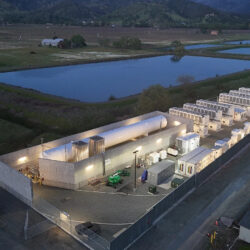
In Napa County, the Calistoga Resiliency Center already operates as California’s first hybrid clean-energy microgrid, pairing lithium-ion batteries with six hydrogen fuel cells to supply 8.5 MW of power, delivering 48 hours of emergency backup to 1,600 customers during high-risk Public Safety Power Shutoffs.
- Advocate for legislation supporting microgrids and hydrogen storage, advancing programs like SB 1339 and the Microgrid Incentive Program.
- Maintain home-hardening premium discounts while implementing building codes that require all newly constructed homes to meet a 24-hour fire resilience standard, utilizing non-combustible technologies such as 3D concrete printing.
- Work with the California Public Utilities Commission and CAISO to align grid infrastructure planning with insurance risk assessments. As community fire hazards drop, gradually roll back Proposition 103’s rigid rate caps in favor of forward-looking catastrophe modeling that reflects real risk reduction.
Download the policy briefing here:
Microgrids with Hydrogen as the Long-Term Solution to California’s Insurance Crisis (PDF)